Wednesday, 15 September 2010

My camouflaged object in a suitable surrounding.


This is my camouflaged object in an setting where it would fit most. I took these pictures in Waterstones at the Graphic Novel section as I could think of no better place to put it and looking at it, it actually fits very well.


Monday, 13 September 2010

My finished Camouflaged object.


After trying to find what my camo design would work best on that closely relates to me, I realised the best thing for the job would be a sketch/ note pad as throughout my life I have filled many with countless ideas, doodles and short comic strips. It wasn't hard for me to find one to camouflage as I have many scattered around my room so I found one that hadn't been used yet so it could be used for my next year at college since it's the final piece of this Summer project.

This project has been good to do over the Summer as it's been useful to learn how to blog as I've never done it before and it probably shows I still need more practice with them as I'm used to rambling on in sketchbooks and whatnot. I found this project fun as we had almost limitless freedom in what we could do but for future work I will really need to save up for graphic design programmes on my computer as it would really help me improve my skills for the coming year.


Cubism

Cubism was a 20th century avant-garde art movement, pioneered by Pablo Picasso and Georges Braque. It revolutionized European painting and sculpture, and inspired related movements in music and literature.

In cubist art, objects are broken up, analyzed, and re-assembled in an abstracted form—instead of depicting objects from one viewpoint, the artist depicts the subject from a multitude of viewpoints to represent the subject in a greater context.

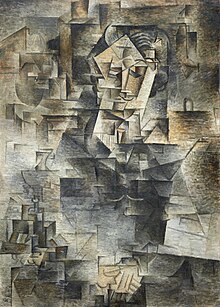
Historical Origins of camouflage in Cubism:- After looking at different types of Cubism I would say Analytic Cubism is the most closely related to camouflage as it seems to look like many different lines and shapes hiding an image in the background, a good examples of this would be the Portrait of Daniel-Henry Kahnweiler, 1910.

Vorticism

Vorticism was a short lived British Art Movement of the early 20th century. It is considered to be the only significant British movement of the early 20th century but lasted less than three years.

The Vorticism group began with the Rebel Art Centre whichWyndham Lewis and saw Vorticism as an independent alternative to Cubism, Futurism and expressionism. The style grew out of cubism, it is more closely related to futurism.

Vorticism uses black bold lines to draw the viewers attention to the centre of the canvas which also makes some parts stick out a lot more than others.

Here are a few examples of what Vorticism work looks like.

Shows a print entitled Liverpool Shipping. It depicts a vast ship in dry dock, which is being painted by a team of people. In the background there are houses, factories and gasometers.Shows a painting entitled Vorticist Composition. A jagged, seemingly random pattern breaks up vast swathes of khaki and a light purple colour.Shows a painting entitled Rain on Princes Street. It is in the Vorticist style and depicts a number of umbrellas bunched together with faces interspersed between them. In the background there are street lamps and buildings and the appearance of driving rain.

Graphic Thought Facility’s Branding for the Design Museum.

By defining a distinctive graphic style to a diverse range of projects, GRAPHIC THOUGHT FACILITY has emerged as one of the UK’s most influential – and productive – graphic design teams. Founded in London in 1990 by Andy Stevens and Paul Neale, GTF now works for such clients as Habitat, Shakespeare's Globe Theatre and the Design Museum.

Examples of work-

GTF create a large variety of Graphic design work and many examples of this can be found on their site, here is a few examples to show how diverse their works are.

Monday, 6 September 2010

Continued Artist Research

Michael Craig-Martin: Craig-Martin's style of detached conceptualism, minimal construction by the artist and the use of readymade techniques inspired by Marcel Duchamp had a marked impression on his students, as did an educational structure based on multi-media, removing traditional departmental demarcations such as "painting", "sculpture" and "time-based [film] media".
Craig-Martin's later works have used a stylised drawing technique often depicting everyday household objects and sometimes incorporating art references, such as objects known from their use in Dada artworks, his work can be compared to that of his earlier contemporary Patrick Caulfield.
Craig-Martin also uses bright colours and using household objects to create different patterns his work can closely relate to this project.


Artist Research

Patrick Caulfield : Patrick Caulfield studied at the Chelsea School of Art from 1956 to 1960, and at the Royal College of Art from 1960 to 1963.Caulfield's paintings are figurative, often portraying a few simple objects in an interior.
In his pictures he uses very thick black lines which may be used to emphasise the shapes and patterns.
You may also notice he uses bright bold colours to simplify the images and I think this creates a very nice eye catching image.

Wednesday, 18 August 2010

Finished Camo Design!


This is the finished design for my camouflage, I am very happy with the way it has turned out and now I need to decide what object I am to place it on, in the mean time I will post more research so I have more time to think!

Developing my camo idea.


I printed off 9 small pictures of each of my drawings so then I could cut them out in different shapes and stick them onto a A4 piece of paper to make my pattern design....and yes it took ages to cut them all out.


The Drawings I will use!


These are the drawings of the Joker i've done that I scanned onto my computer and will use for my camo design, enjoy!


Wednesday, 11 August 2010

Camouflage art research.

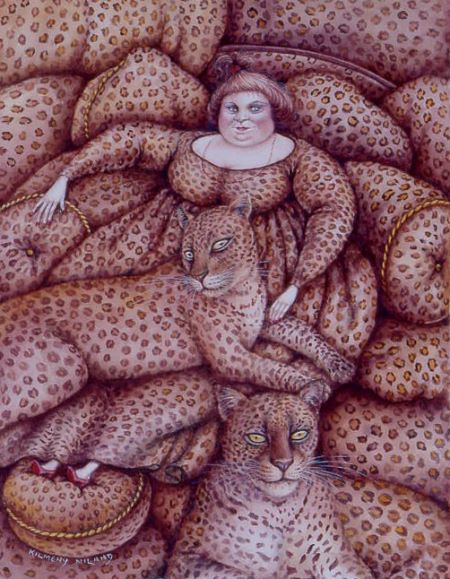
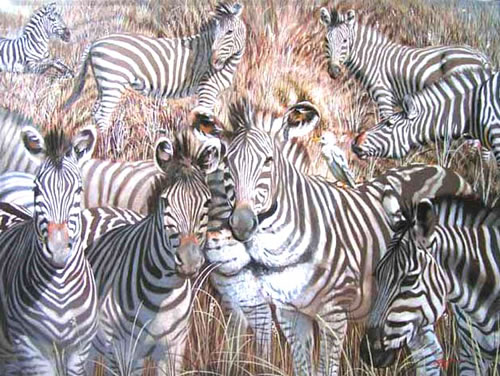
These are examples of camo art that really caught my eye and made me see camouflage and the use for it in a different creative way. Obviously these pictures show just how important colour is to the designs as that's all camouflage really is, different colours put together to create a pattern and/or conceal something.
I think there is a lot of camo art out there just because of the large amount of creative things that can be done with that topic in mind, the images below certainly help get that statement across and there are literally thousands more examples that can be found online.

My idea for Camouflage design and why I'm doing it.

As I've got a great interest for comics and graphic novels I also enjoy drawing characters from these so I can think of nothing better for me to use for my camo design. My design will feature five different drawings of the Joker that I have drawn and I will use the Joker as each drawing I have done of him has improved in my opinion therefore showing five different stages.
I have always enjoyed comics, graphic novels and video games from an early age and that has made me who I am today, it is also one of the reasons I am studying Graphic Design. My camo will be hand rendered as I have always loved drawing and it is what I feel most comfortable with.
The reason that out of all the comic characters I could do I am doing the Joker is mainly because when you tell a person that you love comics and what not most people think you're weird or a bit odd so I could think of no other character that relates to crazy as much as the Joker.

Camo Research

Camouflage has been used in a variety of different ways, mainly known for military purposes but can also be used for art, fashion or just creativity.
These are a few examples of how it is used.

Friday, 28 May 2010

Object that relates to me.

Drawing equipment! I tend to be drawing a lot of the time i'm at home, mainly working on comic and cartoon illustrations.

Favourite Artwork

Image from the graphic novel 'Joker', illustrated by Lee Bermejo my favourite artist.

Camouflage-Joel